Monday, May 6, 2013

Master Control for Unmanned Systems

The Office of Naval Research has developed the equivalent of a master remote control for all military ground, air and undersea unmanned systems, as outlined in a new video.

The Common Control System, comprised of many different common control services, is software that can be added to any unmanned system to allow it to communicate and work with any other. It will run on all types of platform or hardware and can overlay existing systems running on propriety software.


Thursday, May 2, 2013

Navy helicopter squadron with manned, unmanned aircraft established in NAS North Island ceremony

Fire Scout MQ-8 B looks, flies like manned copter


The first Navy helicopter squadron to include manned and unmanned aircraft will be established during a ceremony Wednesday at NAS North Island.
Helicopter Maritime Strike Squadron 35, the "Magicians," will be outfitted with what the Navy calls its most technologically advanced helicopter, the Sikorsky Multi Mission MH60-R.
It will also have the Fire Scout MQ-8 B, a drone that looks and flies like a regular helicopter. The Fire Scout was only recently added to the fleet, according to the Navy.
The Navy says the unmanned chopper can be operated from up to 110 miles away.
The squadron will deploy on the new littoral combat ships -- fast, highly maneuverable vessels designed for fighting in coastal waters.
The Navy is scheduled to hold a ceremony for the new squadron at 10 a.m. on base, with remarks from Vice Adm. David Buss, the commander of Naval Air Forces.
Watch Northrop Grumman video of the Fire Scout's ship testing:

Wednesday, May 1, 2013

North Korea embraces 3G service

North Koreans cannot access the internet via 3G on
their phones

Almost two million North Koreans now use the country's only 3G network, reports a blog dedicated to technology news in North Korea.


The figure has been confirmed by 3G provider Koryolink, a partnership between Egyptian telecoms firm Orascom and the North Korean government.
The service can only be used to make voice calls, and all international calls are banned.
At the start of 2012 Koryolink claimed to have one million 3G subscribers.
In January 2013 the government began allowing visitors to the country to bring in their mobile phones for the first time.
Unlike residents, they would now be able to use the 3G network for mobile internet access as well, by purchasing local SIM cards, the country said at the time.
However last month a China-based tour operator called Koryo Tours, which specialises in tourist visits to North Korea, posted a note on its website saying that 3G was no longer available for visitors.
North Koreans only have access to a very limited, state-run set of internet pages.
When Google Chair Eric Schmidt visited the country at the start of the year he urged the government to allow citizens access to the wider internet and said it would be "easy" for the 3G network to include data access.
"As the world becomes increasingly connected, the North Korean decision to be virtually isolated is very much going to affect their physical world and their economic growth," he wrote in a blog post.

Tuesday, April 30, 2013

Warning over bug in Android Viber chat app

The flaw revolves around the way that
 Viber handles repeated pop-up messages
Security firms are warning about a security bug in the popular Viber app for Android phones.
The flaw in the net phone application lets attackers bypass screen locks and take control of a smartphone.
The app has been downloaded more than 50 million times from Google's Play store according to statistics from the search giant.
Viber said it was aware of the flaw and was preparing to release a fix that would close the loophole.
The flaw was discovered by Vietnamese security firm Bkav and works in different ways depending on which Android phone a victim is using. In a blog post, Bkav said the attack revolved around sending several messages to a victim via Viber.
The free Viber app works like Skype and lets Android phone users send messages and talk for free. Bkav discovered that sending pop-up messages and using some other parts of the Viber app let them circumvent the lock screens that many people use to secure their phones.
"The way Viber handles to pop-up its messages on smartphones' lock screen is unusual, resulting in its failure to control programming logic, causing the flaw to appear," said Nguyen Minh Duc, head of Bkav's security division. He advised people not to let anyone else use their phone until the bug was fixed.
Viber said it was aware of the flaw and, via its support forum, gave people advice about how to avoid falling victim. It said it was working on a fix and hoped to resolve the issue soon.
The discovery of the bug is the latest in a series of security flaws that have struck apps in Google's Android store. Many cyber thieves are aiming their efforts at the phones in a bid to steal saleable information or generate revenue by getting handsets to call or send messages to premium rate numbers.
Despite this, Martin Borrett, director of IBM's European Institute for Advanced Security, said phone apps were getting more secure faster than other sectors at the same point in their development.
IBM was "optimistic" about the improving security of mobile apps because tools were emerging that made it straightforward to scan code for the bugs and loopholes that cyber thieves seek, he said.
"You cannot expect all developers to be experts in security," he said. "We have to make tools that make it easier for them.
"I think people are more switched on to the issues and are better placed to address them and have the knowledge and tools to counter these threats," he told the BBC.

Sunday, April 28, 2013

In Porting Ship Simulation and Training Technologies for U.S. Mariners

Quality Maritime Training (QMT) of St. Petersburg, Florida has partnered with Educational Systems and Technologies on the River and the Sea; STORM Ltd., to provide STORM's marine simulators, computer based training (CBT) programs and crew knowledge assessment systems to U.S. mariners.  STORM is headquartered in Moscow, Russia  and also has a second location in Saint Quentin, France - STORM SIM SARL.  STORM's main activities are the development of innovative technologies for comprehensive training and manufacturing simulators for mariner training programs and interactive distance technologies in education.

QMT recently installed STORM's "SSH" ship steering simulator, which is designed for training, demonstration of competence in accordance with the Seafarers' Training, Certification and Watchkeeping (STCW) Code, as amended by the 2010 STCW Convention amendments for the Rating Forming Part of a Navigational Watch (RFPNW) and Able Seafarer Deck qualified ratings.

QMT obtained U.S. Coast Guard approval of STORM's simulator earlier in the year to utilize it for training and conducting the proficiency assessments as part of their Rating Forming Part of a Navigational Watch Assessment course.  Once the Coast Guard publishes the pending regulations for U.S. mariner compliance with the STCW Code, as amended.  QMT intends in addition to conducting the RFPNW assessments, to also use the "SSH" ship  simulator to train and assess mariners for the new STCW rating Able Seafarer Deck and in ship handling for Officer in Charge of the Navigational watch (OICNW) candidates on vessels of 500GT (ITC) tonnage of more.

The "SSH" system provides the trainee with the console display for ship control and wheelhouse capabilities for autopilot, manual or tracking modes; helm wheel; engine control; magnetic compass; gyro compass repeater; bearing taking tools; course recorder; binocular view and visualization of the surrounding surface situation. The bridge view visualization of is 180º  and a head rotation view to 360º.  The simulator can be configured for different types of own ship models of various tonnages.

The instructor can implement ship control and navigation equipment failures for gyro-compass, steering pump and steering motor failures.  Additionally, the instructor can activate ARPA guard zone intrusion alarms, gyro-compass failure alarm, smoke and/or heat detectors alarms, navigation light panel alarms, steering pump and motor failures alarms.

Simulated target vessels can be created to represent other merchant vessels, workboats, small boats, sail boats , recreational craft, patrol boats, fast rescue boats and survival craft.
The simulator allows selection of navigation exercise areas for own ship in areas of straits or narrow passages, port departure to open sea, inland waterways, inland waterways with access to the sea and open sea areas.

George Trowbridge the owner of Quality Maritime Training, says he is looking forward to the future of mariner training, which he foresees to include the leveraging of more distance learning technologies, multimedia training software and shipboard simulation training and assessment.

Trowbridge sees the installation of the "SSH" ship simulator as just the beginning of new and highly competitive training technologies from Europe into the U.S. market.

Our intention is to work with STORM to introduce their training and education products to the U.S. market. With STORM offering very affordable and high quality  products that range from computer-based training (CBT) and technology learning software to full bridge and engine room simulation systems, we don't see any other suppliers in the United States that  can be competitive with STORM.   "By QMT partnering with STORM the means of making available to U.S. mariners the latest training technologies at an affordable cost has finally arrived on our shores."

Saturday, April 27, 2013

More Details On LaWS (Laser weapon system)

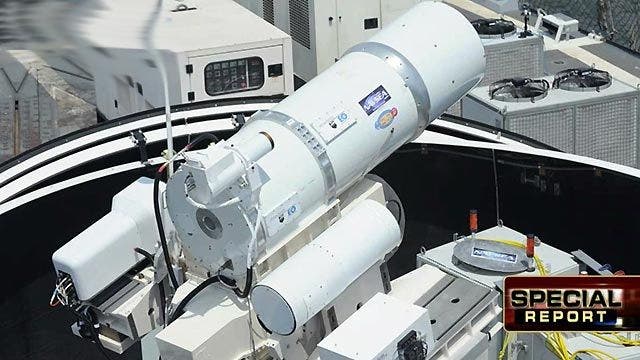
Citing a series of technological breakthroughs, Navy leaders announced plans Apr. 8 at the Sea-Air-Space exposition to deploy for the first time a solid-state laser aboard a ship in fiscal year 2014.

"Our directed energy initiatives, and specifically the solid-state laser, are among our highest priority science and technology programs. The solid-state laser program is central to our commitment to quickly deliver advanced capabilities to forward-deployed forces," Chief of Naval Research Rear Adm. Matthew Klunder said. "This capability provides a tremendously affordable answer to the costly problem of defending against asymmetric threats, and that kind of innovative approach is crucial in a fiscally constrained environment."

The announcement to deploy the laser onboars USS Ponce (AFSB[I] 15) comes as Navy researchers continue to make significant progress on directed energy weapons, allowing the service to deploy a laser weapon on a Navy ship two years ahead of schedule. The at-sea demonstration in FY 14 is part of a wider portfolio of near-term Navy directed energy programs that promise rapid fielding, demonstration and prototyping efforts for shipboard, airborne and ground systems.

"Our conservative data tells us a shot of directed energy costs under $1," Klunder said. "Compare that to the hundreds of thousands of dollars it costs to fire a missile, and you can begin to see the merits of this capability."
The Office of Naval Research (ONR) and Naval Sea Systems Command recently performed demonstrations of high-energy lasers aboard a moving surface combatant ship, as well as against remotely piloted aircraft. Through careful planning of such demonstrations and by leveraging investments made through other Department of Defense (DoD) agencies, researchers have been able to increase the ruggedness, power and beam quality of lasers, more than doubling the range of the weapons.


"The future is here," said Peter A. Morrision, program officer for ONR's Sold-State Laser Technology Maturation Program. "The solid-state laser is a big step forward to revolutionizing modern warfare with directed energy, just as gunpowder did in the era of knives and swords."

Officials consider the solid-state laser a revolutionary technology that gives the Navy an extremely affordable, multi-mission weapon with a deep magazine and unmatched precision, targeting and control functions. Because lasers run on electricity, they can be fired as long as there is power and provide a measure of safety as they don't require carrying propellants and explosives aboard ships.

Lasers complement kinetic weapons to create a layered ship defense capability, providing improved protection against swarming small boats and unmanned aircraft at a fraction of the cost of traditional weapons.

The advancing technology gives sailors a variety of options they never had before, including the ability to control a laser weapon's output and perform actions ranging from non-lethal disabling and deterrence all the way up to destruction.

"We expect that in the future, a missile will not be able to simply outmaneuver a highly accurate, high-energy laser beam traveling at the speed of light," Klunder said.

Following the USS Ponce demonstration, the Navy and DoD will continue to research ways to integrate affordable laser weapons into the fleet.

Friday, April 26, 2013

The future is now: Navy to deploy lasers on ships in 2014


The Pentagon has plans to deploy its first ever ship-mounted laser next year, a disruptive, cutting-edge weapon capable of obliterating small boats and unmanned aerial vehicles with a blast of infrared energy.
Navy officials announced Monday that in early 2014, a solid-state laser prototype will be mounted to the fantail of the USS Ponce and sent to the 5th fleet region in the Middle East for real-world experience.
'It operates much like a blowtorch ... with an unlimited magazine.'
- Navy official
Video released by the Navy shows the laser lock onto a slow-moving target, in this case an unmanned drone, which bursts aflame in mid-flight. The drone soon catches fire and crashes into the sea below.
"It operates much like a blowtorch ... with an unlimited magazine," one official said.
There are potential targets for the laser in the 5th fleet region, which includes the Persian Gulf, where Iran operates small surveillance drones and is known for swarming and harassing U.S. Navy ships with small, armored speed boats.
Navy researches say so far the laser is 12 for 12 in testing, destroying its targets 100 percent of the time. Officials who briefed the press on the laser gun -- which the Navy calls a "directed energy pulse weapon" -- say it has non-lethal functions too, and may be used to send warning signals to other vessels.
One of its major advantages, the Navy said, is its relatively low cost to operate. "Its weapon round costs about $1 to shoot," said Rear Admiral Matthew Klunder, chief of Naval Research. Although the unit cost is higher -- at around $32 million to produce.
Still, Navy officials say this is a major accomplishment when compared to the Airborne Laser, the Air Force's now cancelled project to put nose-mounted lasers on its aircraft. Those lasers cost nearly $1.5 billion a piece.
“This wasn’t demonstrated on a barge. This was on a naval warship. And the performance results were quite astounding,” Klunder said.
There are some concerns with the new technology, however. Navy officials expressed worries with its ability to fire in poor weather conditions and believe the 5th fleet region will be a great test of the weapon’s abilities. It's also unclear if the laser can effectively take down faster moving objects, such as fighter jets.
Officials also would not reveal the range of this new weapon, describing it as more of a "close in" system. Energy levels were also classified. If successful, it will eventually be painted Navy grey and mounted on top of the ship with the rest of the major weapons systems.
The Navy and other armed forces have been experimenting for years with these directed energy weapons -- laser guns to you and me. Such weapons could be the future of warfare.
In April 2011, the Navy conducted a more limited test of a similar weapon, blasting a boat from the water with a laser weapon. Nevin Carr, chief of Naval Research at the time, said this energy weapon would not handle all types of threats, however.
"To begin to address a cruise missile threat, we'd need to get up to hundreds of kilowatts," Carr said.
The Navy is working on just such a gun of course.
Called the FEL -- for free-electron laser, which doesn't use a gain medium and is therefore more versatile -- it was tested in February 2011, consuming blistering amounts of energy and burning through feet of raw steel.
The FEL will easily get into the kilowatt power range, experts say. It can also be easily tuned as well, to adjust to environmental conditions, another reason it is more flexible than the fixed wavelength of solid-state laser. But the Navy doesn't expect to release megawatt-class FEL weapons until the 2020s; among the obstacles yet to be overcome, the incredible power requirements of such weapons.
Also in the Navy's futuristic arsenal: a so-called "rail gun," which uses an electomagnetic current to accelerate a non-explosive bullet at several times the speed of sound. Railguns are even further off in the distance, possibly by 2025, the Navy has said.
But lasers? Forget Buck Rogers and the 25th century. They’re here today.

Thursday, April 25, 2013

US ARMY SEEKS NEW TECHNOLOGY TO REPLACE GPS

The US army is working to limit its dependence on GPS by developing the next generation of navigation technology, including a tiny autonomous chip, the director of the Pentagon's research agency said Wednesday.
DARPA, the research group behind a range of spy tech and which helped invent the Internet, was also the driving force behind the creation of the Global Positioning System, director Arati Prabhakar said at a press conference.
"In the 1980s, when GPS satellites started to become widely deployed... it meant carrying an enormous box around on your vehicle," she said.
"Now it's got to the point where it's embedded not just in all our platforms but in many of our weapons," as well as in many civilian devices, she said.
But "sometimes a capability is so powerful that our reliance on it, in itself, becomes a vulnerability," she added.
"I think that's where we are today with GPS."
Among the fears: the GPS signal could be scrambled by an adversary, as happened recently in South Korea.
Starting in 2010, DARPA has been working on a variety of programs aimed at developing new navigation and positioning technology -- at first with the goal of extending their reach to places where satellites don't work, such as underwater.
But now, amid fears of over-reliance on -- and possible vulnerabilities with -- global positioning satellites, experts are looking to create not just a companion, but an alternative to GPS.
To that end, researchers at DARPA and the University of Michigan have created a new system that works without satellites to determine position, time and direction, all contained within a eight-cubic-millimeter chip.
The tiny chip holds three gyroscopes, three accelerometers and an atomic clock, which, together, work as an autonomous navigation system.
DARPA envisages using this technology to replace GPS in some contexts, especially in small-caliber ammunition or for monitoring people.
Another approach would use existing signals, such as those generated by broadcast antennas, radios, telephone towers and even lightning to temporarily replace GPS.
Prabhakar emphasized there "will not be a monolithic new solution, it will be a series of technologies to track and fix time and position from external sources."